InterContinental Maldives Maamunagau Resort’s Arun Sivasankaran on learning beyond the pastry kitchen
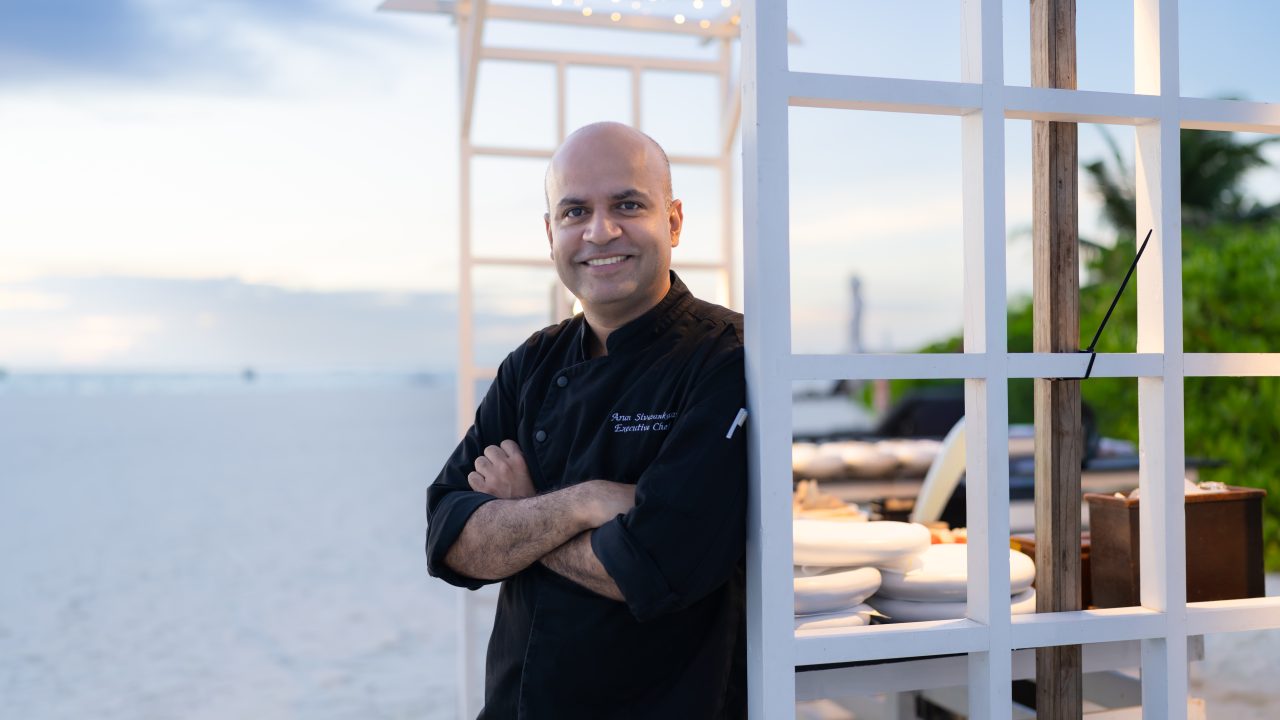
Arun Sivasankaran has watched chefs he has worked with become executive pastry chefs, chief bakers and chefs de cuisine. Others have opened businesses. Asked to identify one whose progress has meant the most to him, the Executive Chef at InterContinental Maldives Maamunagau Resort declines to single anyone out.
“I would rather not single out one individual, because I do not want to take credit for someone else’s success,” he says.
His approach to mentoring has its roots in his own education. Arun began his career at Taj Malabar in Cochin in 2003, learning through observation and practice. Access to recipes and information was more limited, and the willingness of colleagues to explain their work helped him build his understanding of the kitchen.
“We did not have the same access to recipes and information that young chefs have today, so much of our knowledge came from watching experienced chefs, asking questions and learning through practice.”
He moved to the Maldives in 2009, joining Velassaru as a Demi Chef de Partie in Pastry. The years that followed took him through resort kitchens in the Maldives, the Middle East and the Caribbean, where changes in ingredients and guest expectations required him to adapt.
Pre-opening assignments at Niyama Maldives, Kempinski in the Caribbean and Simaisma Resort in Qatar also expanded his understanding of how kitchens function. Before serving a meal, teams had to consider equipment, layouts, recruitment and training. Opening The Ritz-Carlton Maldives, Fari Islands, during COVID added the demands of working through disruption.
“You learn that a successful restaurant is not built on the menu alone,” Arun says. “It depends on the people behind it, the systems in place and the ability to deliver the same standard day after day.”

Pastry remained his foundation, but his interest extended into savoury cooking. Even while working as a pastry chef, he spent time with colleagues in other sections, watching their methods and getting involved when he could. After serving as Executive Pastry Chef at The Ritz-Carlton Maldives, he joined InterContinental Maldives as Executive Sous Chef.
“The biggest challenge was stepping outside my comfort zone,” he says. “I was confident in pastry, but savoury cooking required me to continue learning, develop a different understanding of ingredients and techniques, and look at the kitchen as a whole rather than through the lens of one speciality.”
Chef Deepesh, then the resort’s Executive Chef, supported that transition. Arun recalls his patience and willingness to share knowledge, alongside the lessons he gained from colleagues. Taking on responsibility across the kitchens required him to keep asking questions, even after years in the profession.
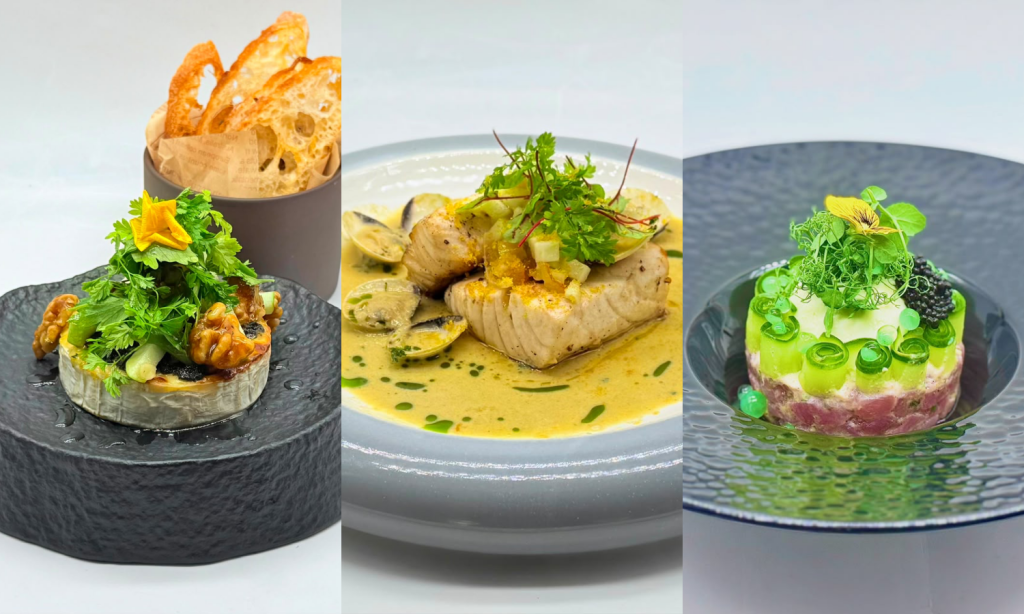
His pastry training continues to influence his cooking. He pays attention to texture and the balance between sweetness and acidity, while applying the discipline of recipe development and standardisation to savoury dishes. Presentation has to serve the food.
“Nothing should be on the plate simply for decoration,” he says.
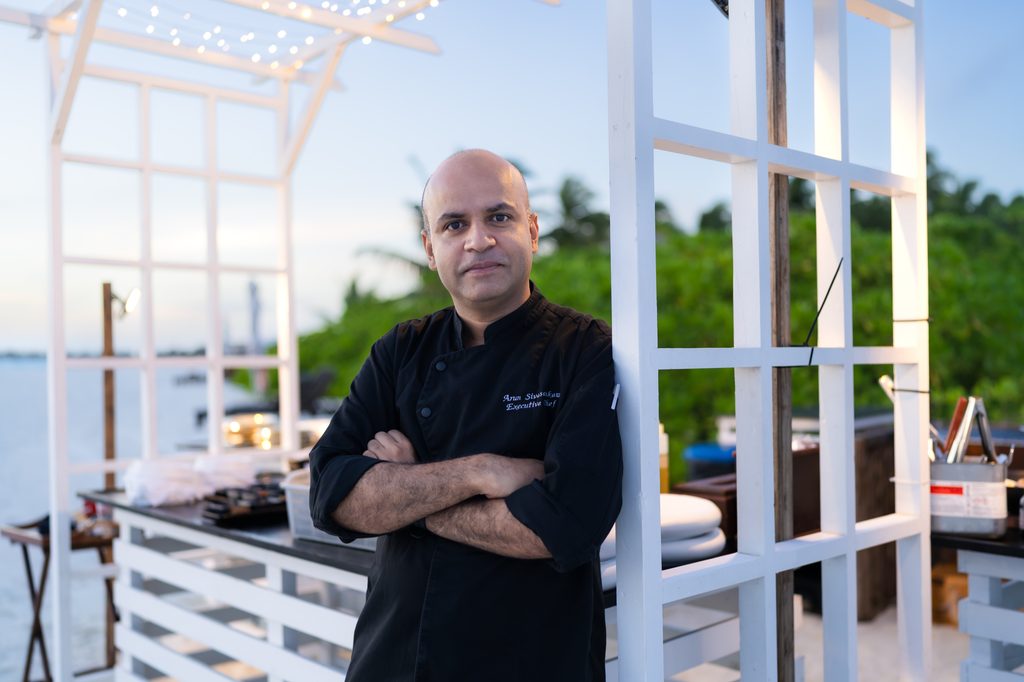
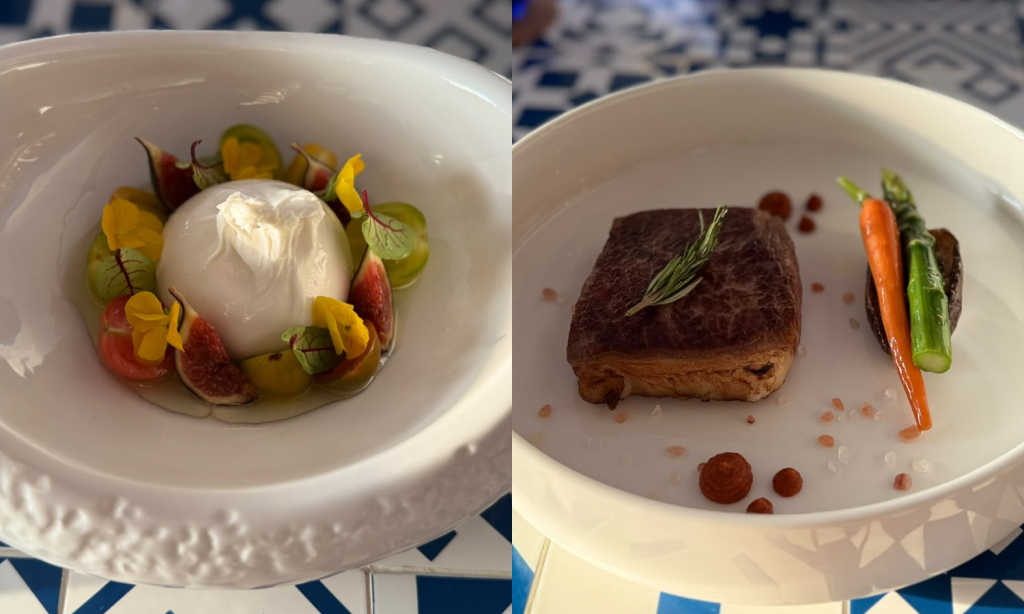
That concern with purpose extends to the resort’s restaurants. Lighthouse follows a Mediterranean direction, while Fish Market combines seafood with Southeast Asian influences. Café Umi incorporates Japanese influences into its offering, The Collective serves pizza, and The Retreat is developing a greater focus on healthier choices. Each needs an identity that gives guests a reason to dine there, with standards the team can maintain.
Developing a dish involves discussing flavour alongside ingredient availability, cost and portion size. The team tastes and refines it, considers dietary requirements and establishes how it will be prepared and plated. Training follows before the dish reaches guests, whose feedback can prompt further changes.
“A dish might be excellent in a tasting, but it needs to work just as well when the kitchen is busy and several tables are ordering at once,” Arun says.
Island operations make those decisions inseparable from delivery schedules, storage and freshness. Menus must account for what can be obtained and when. Seafood gives the team opportunities to connect the restaurants to the Maldives, with tuna and other fish lending themselves to different preparations across the venues.
Arun also looks for uses for parts that might otherwise be overlooked. A pil-pil sauce made using fish heads is one example. It allows the kitchen to extract flavour and value from more of the ingredient, applying his belief that the skill of the cook matters to the dining experience.
“For me, luxury dining is not simply about sourcing the most expensive ingredients,” he says. “It is about knowing your ingredients, treating them properly and having the skill to turn them into something memorable.”
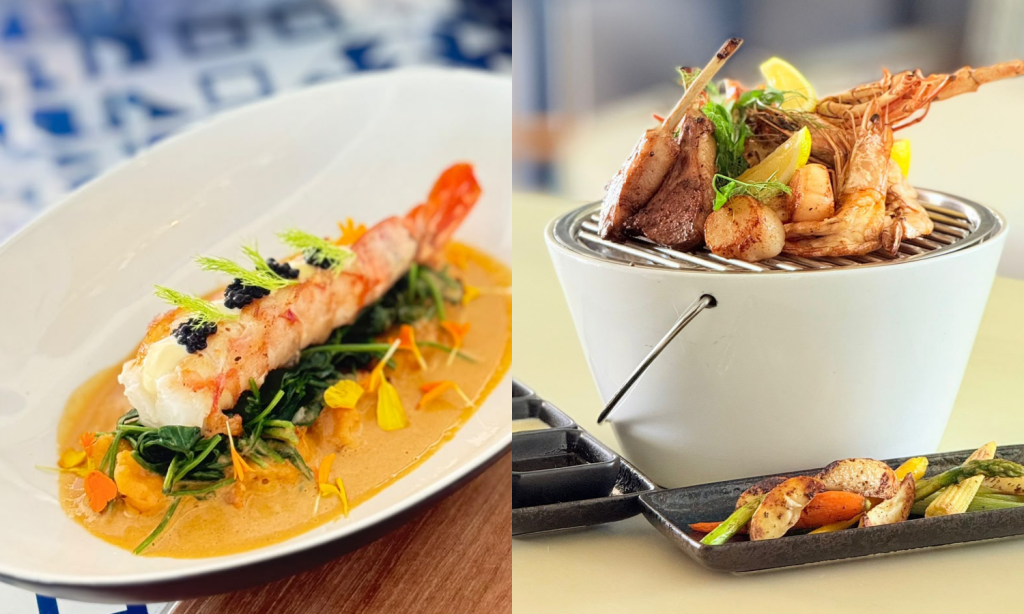
Understanding the person eating the food brings another set of responsibilities. Arun recalls adapting a lobster dish with Champagne beurre blanc to exclude dairy and garlic. Doing so required the team to examine every component and ensure that kitchen and service colleagues understood the request before the dish reached the guest.
Conversations can also reveal a childhood dish or a meal remembered from a previous journey. Those details give chefs an opportunity to draw on their experience and available ingredients to prepare something that carries meaning for the guest.
“We can spend hours perfecting a technically challenging dish, but sometimes it is a familiar flavour or a thoughtful gesture that a guest remembers most.”
Learning continues through collaborations with visiting chefs, including Benjamin Chmura, Tom Aikens and Thanos Feskos. Arun pays attention to how they build flavour, organise service and communicate with their teams. After a residency, his colleagues discuss what they have learnt and which ideas can be applied within their own restaurants. The exchange also gives younger chefs access to people whose work they may have followed for years.
As Executive Chef, Arun now has to consider the team’s development alongside guest experience and the restaurants’ commercial performance. Chefs are encouraged to propose dishes, which are tasted and discussed together. Once approved, recipes and presentation need to be clear enough for colleagues to reproduce them consistently.
“I do not believe in a culture where people are afraid to ask questions or admit when something has gone wrong,” he says. “At the same time, everyone needs to understand their responsibilities and the standards expected of them.”
When identifying potential, he looks for curiosity, reliability and a willingness to learn alongside technical ability. He gives responsibility gradually, explaining the reasoning behind decisions and encouraging chefs to think for themselves. As their confidence grows, they begin to understand the operation beyond their own section and how to support others.
“For me, developing chefs is about giving them the tools and confidence to eventually stand on their own.”
His own culinary identity remains a work in progress, informed by his Kerala roots, his years in the Maldives and his experience overseas. He wants those influences to emerge through food with a sense of flavour and purpose, while continuing to develop the restaurants and create opportunities for colleagues.
The chef who once depended on others to explain their methods now carries that responsibility himself. Yet leading the kitchen has left room for the same curiosity that brought him into savoury cooking.
“I am proud of how far I have come, from starting out in pastry in India to leading the culinary team at InterContinental Maldives,” he says. “But I still see myself as a student of the profession.”
Chefs Executive Chef Featured InterContinental Maldives Maamunagau Resort Interview Profile