From Kaashi Hovun to the kitchen: How Maldives resorts marked World Coconut Day
In a Maldivian kitchen, coconut rarely needs an introduction.
It is grated into mas huni, squeezed for milk, worked into curries, sweets and hedhika, opened young for its water and flesh, and used at different stages of maturity for different purposes. Long before it became associated with tropical resort imagery, the coconut was part of how island communities cooked, built, crafted and lived.
On World Coconut Day, marked on 2 September, resorts across the Maldives brought that relationship into focus in different ways. There were coconut-inspired dishes and traditional delicacies, but the celebrations also extended beyond the plate: teams competed in coconut collection and dehusking, climbers harvested fruit for guest welcome drinks, and resorts used the occasion to tell stories about Maldivian culinary heritage, island life and the versatility of an ingredient growing around their kitchens.
The international theme for World Coconut Day 2026, “Coconuts in Times of Uncertainty: Securing Food, Energy, and Livelihoods”, places the crop within a wider conversation about food, livelihoods and resilience. In the Maldives, where coconut has been part of the food culture for generations, the day offered resort culinary and hospitality teams an opportunity to interpret those ideas at island level.
Starting with the coconut itself
At Madifushi Private Island, the celebration began before the coconut reached the kitchen.
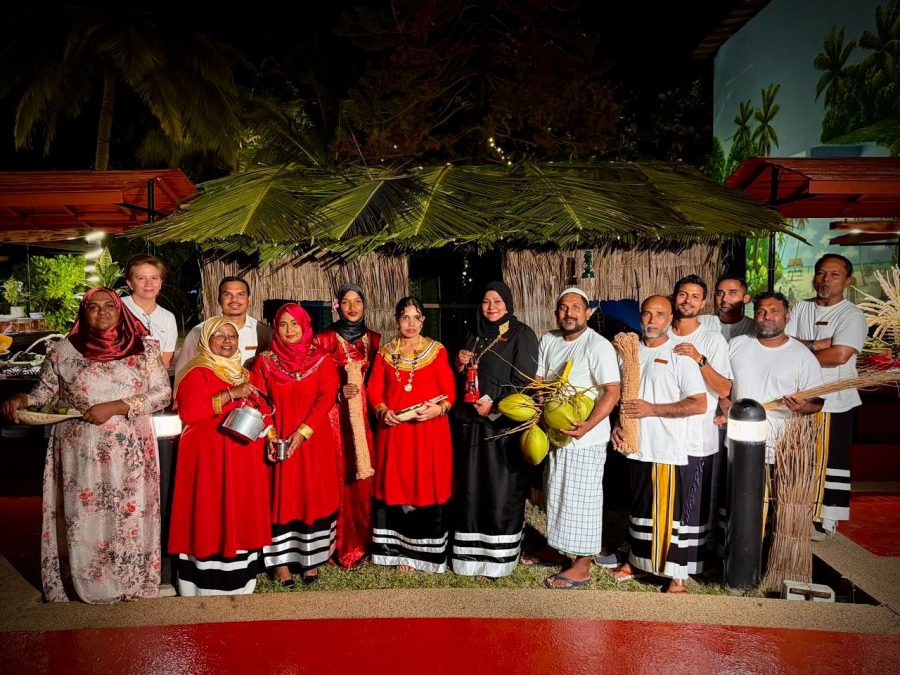
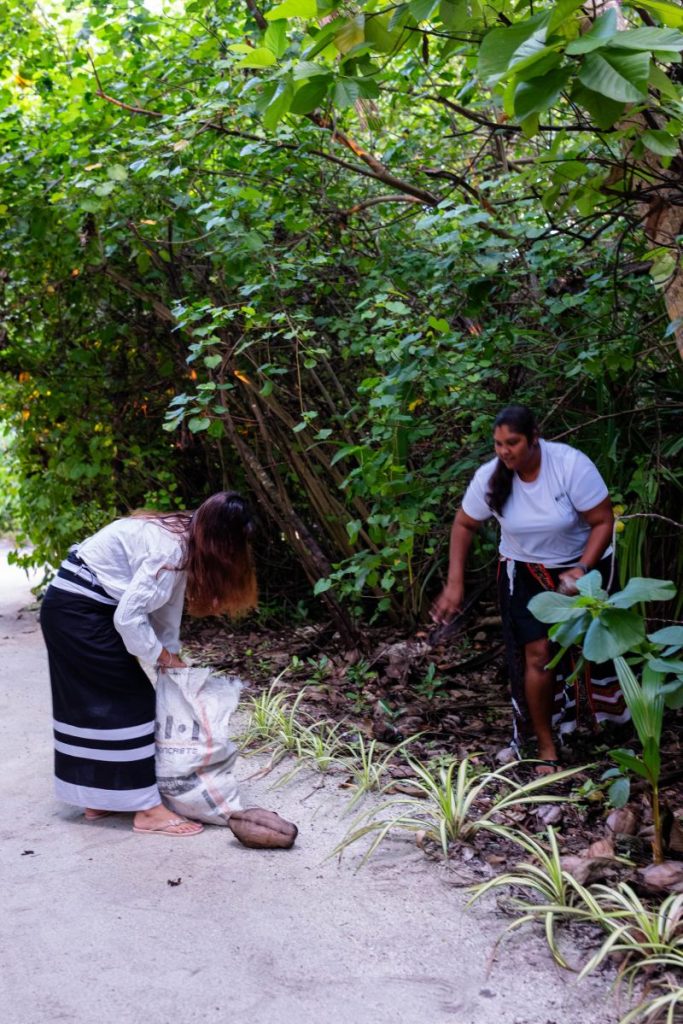
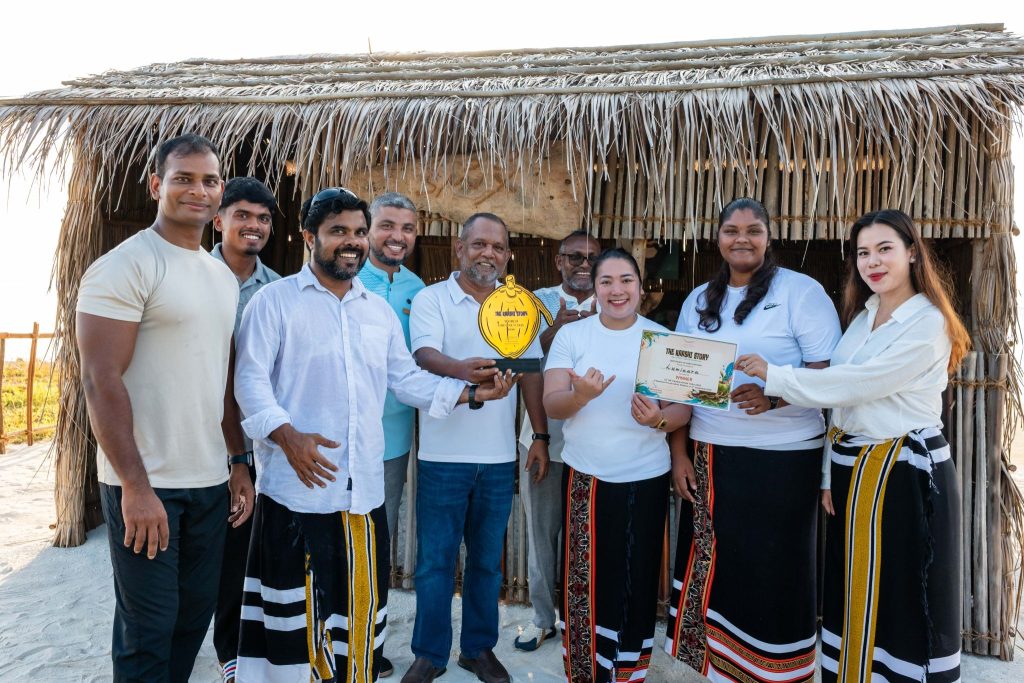
Team members took part in a Kaashi Hovun Challenge, with the island’s four houses competing in an activity built around Maldivian tradition. Dressed in local attire, participants raced to collect coconuts, transported them by wheelbarrow and tested their skills at dehusking.
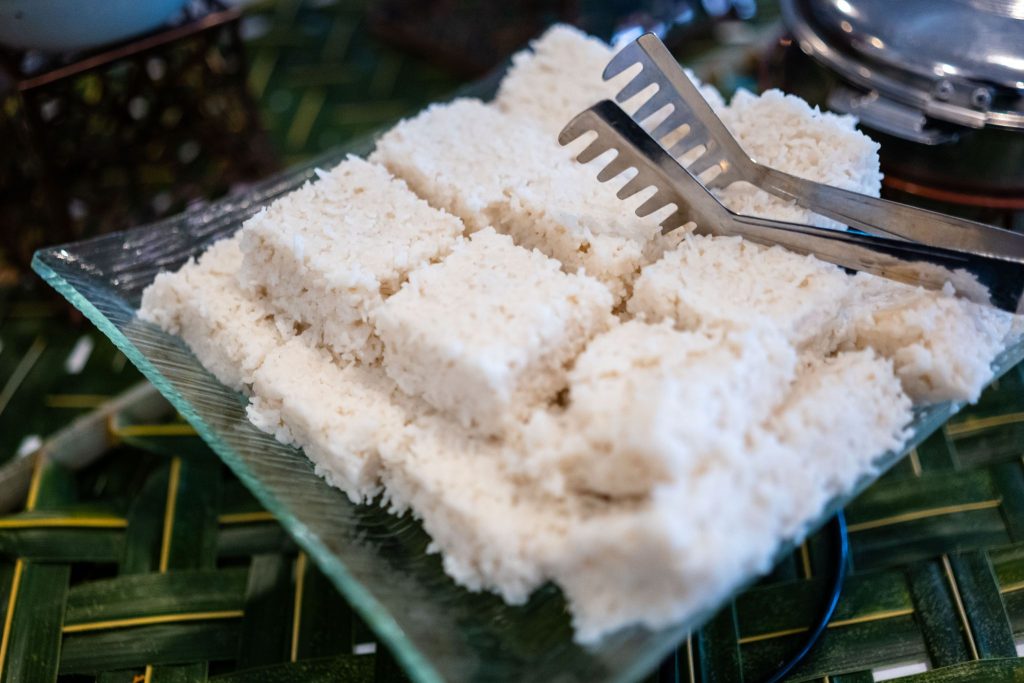
The activity was followed by a breakfast buffet for the resort team featuring a dedicated section of coconut-inspired specialities and traditional delicacies.
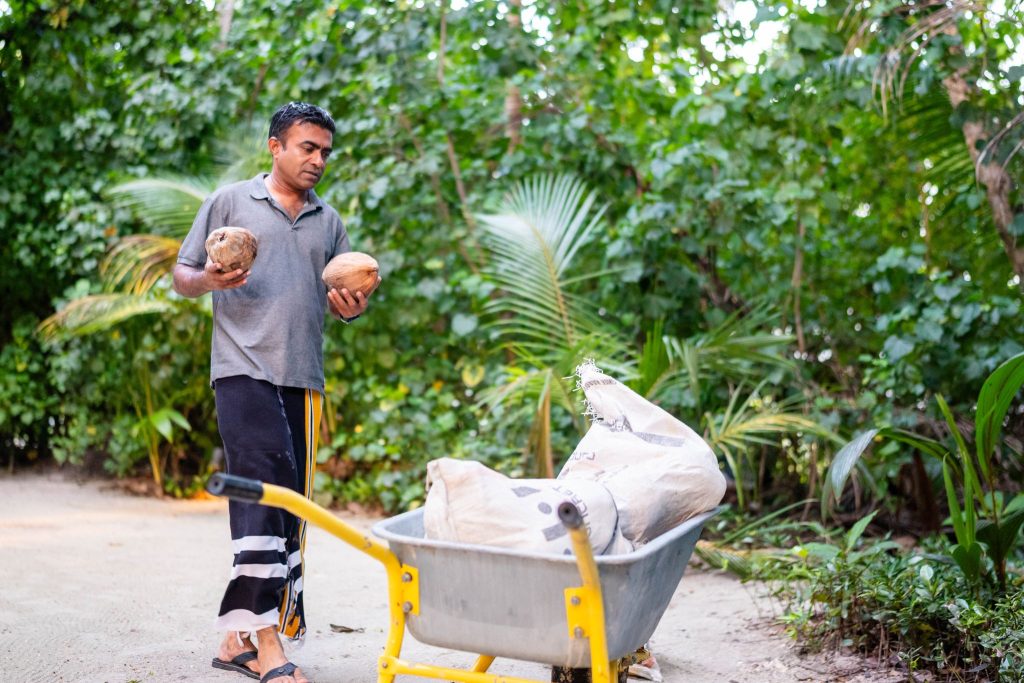
For chefs, the sequence is significant. The celebration did not start with a finished dish. It started with the raw ingredient and the physical skills once associated with getting that ingredient from palm to kitchen.
Dehusking, grating and extracting coconut milk can easily disappear from view in a professional kitchen where prepared ingredients and packaged products offer consistency and speed. Bringing those processes back into a celebration helps connect the food on the buffet with the knowledge required to produce it.
It also makes coconut less abstract. Before coconut milk is poured from a container or desiccated coconut enters a pastry section, there is a fruit that must be harvested, opened and processed.
From the palm to the guest
Sirru Fen Fushi Private Lagoon Resort approached World Coconut Day through another part of the hospitality journey: the arrival experience.
The resort highlighted its signature welcome coconut, which begins with coconuts growing on Sirru Fen Fushi itself. Coconut climbers harvest the fruit from the island’s palms before each coconut is freshly opened, finished with a hibiscus flower and presented to arriving guests.
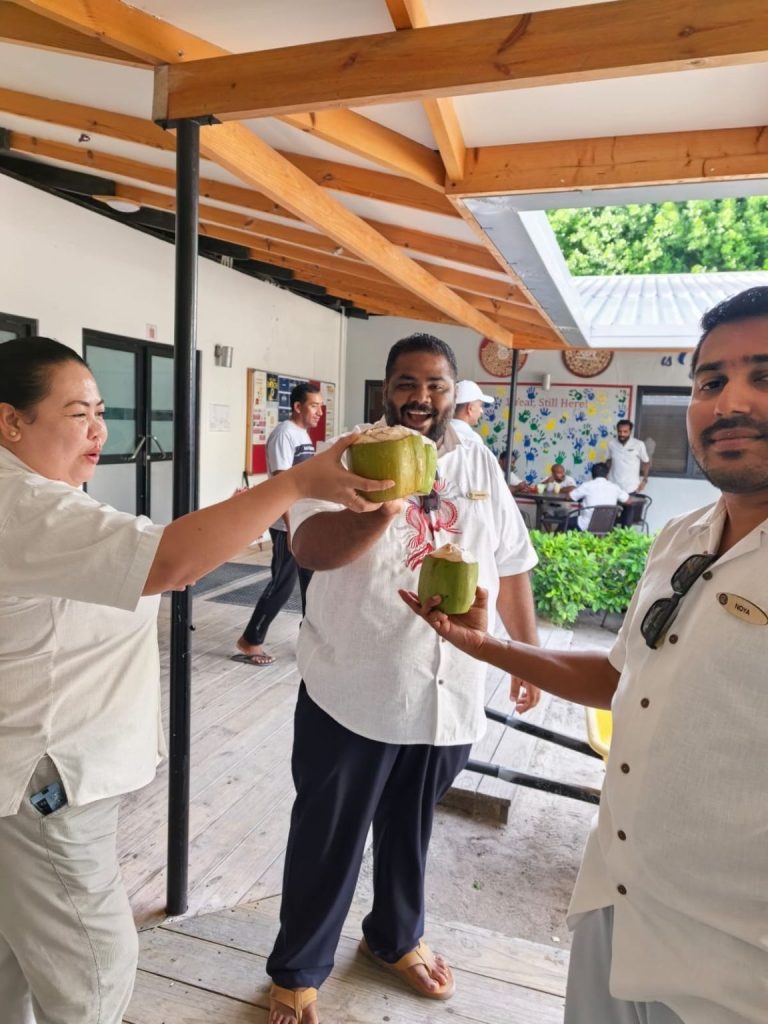
It is perhaps one of the simplest food-and-beverage experiences available at a Maldivian resort: a freshly opened coconut.
Yet its simplicity also provides something increasingly important in resort dining — provenance.
The guest can see the palms. The ingredient is harvested on the island. Preparation is minimal. There is little need to manufacture a story around the product because the connection between source and service already exists.
For culinary and beverage teams exploring more destination-led experiences, that principle can be applied far beyond the welcome drink. The value of a local ingredient often lies not in transforming it beyond recognition, but in allowing guests to understand where it came from and why it belongs there.
Coconut as culinary heritage
Baros Maldives used World Coconut Day to place the ingredient within a wider conversation about Maldivian cuisine.
In its World Coconut Day message, the resort pointed to its chef’s garden, planted in volcanic soil, its weekly Maldivian feast and an approach to “conscious cuisine” that encourages guests to become involved in food preparation. Baros framed the experience around learning, cooking and understanding the culinary heritage of the destination rather than dining as spectacle alone.
That distinction matters.
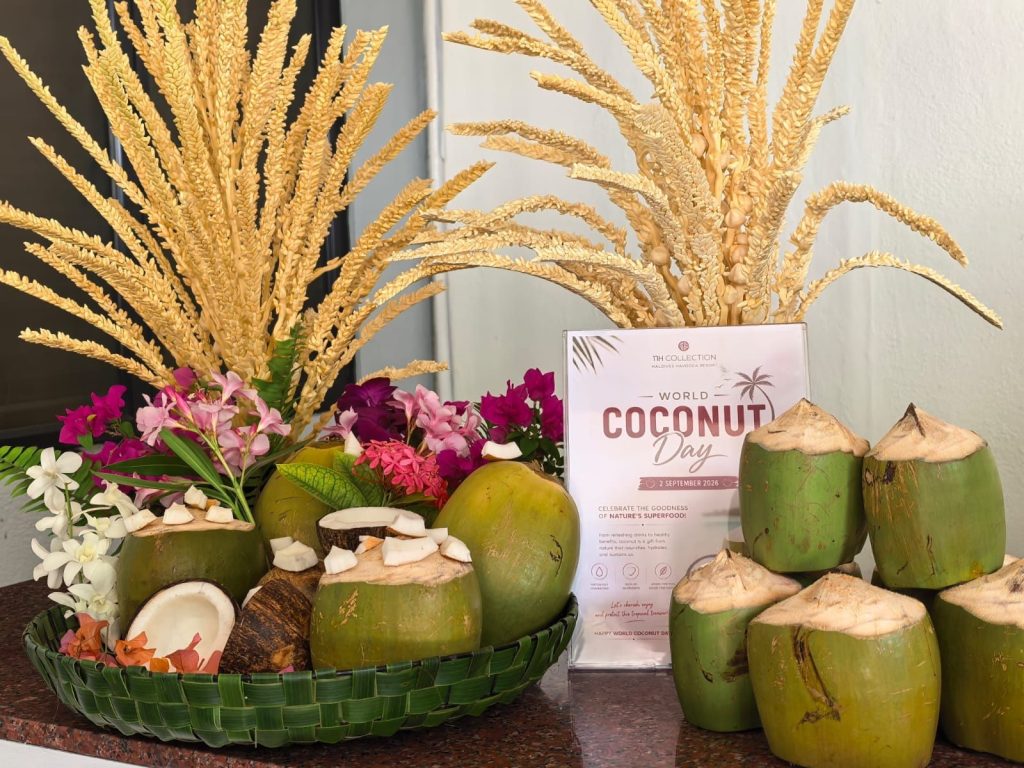
Maldivian food is built around ingredients shaped by what island communities historically had available. Visit Maldives identifies fish, coconut and breadfruit among the ingredients on which Maldivians traditionally depended, with fish and coconut and their derivatives forming the basis of many dishes.
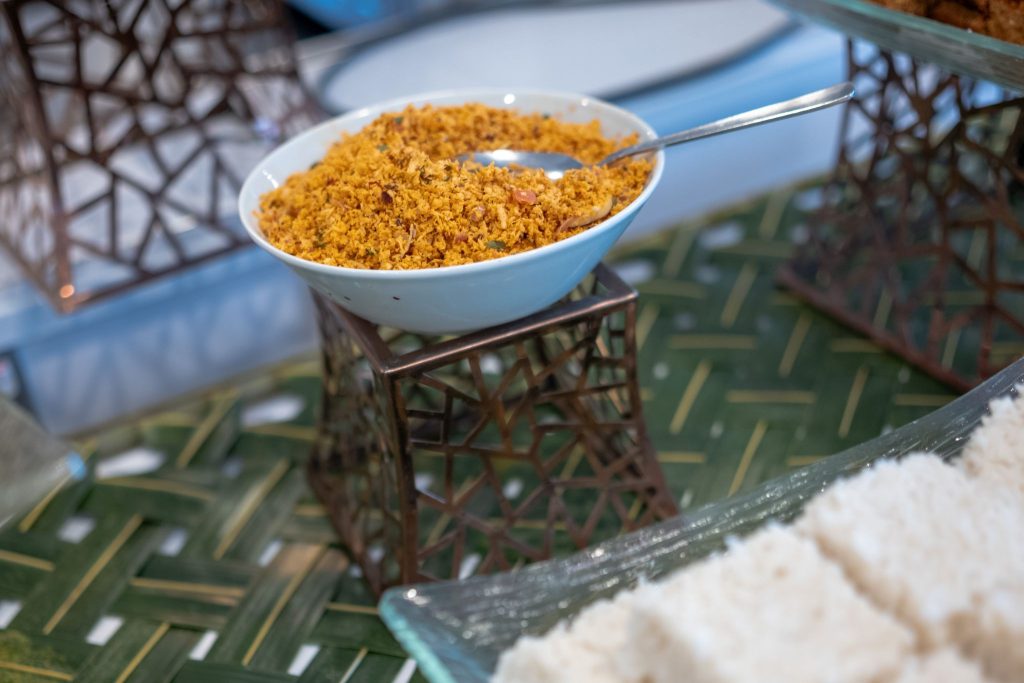
Mas huni provides perhaps the most recognisable example. Its basic combination of tuna, grated coconut, onion, chilli and lime remains one of the country’s defining breakfast dishes. But coconut’s contribution to Maldivian food extends much further.
The mature coconut, kaashi, is grated for dishes and hedhika. Coconut milk, kaashi kiru, extracted from the flesh, goes into curries and desserts. Young kurumba provides water and soft flesh, while the sprouted mudi kaashi offers another texture and flavour altogether. Coconut palm sap also has culinary uses, including its transformation into forms of coconut honey and sugar.
For chefs, these are not simply different products derived from the same ingredient. They represent different stages of one ingredient, each carrying its own texture, application and cultural meaning.
Celebrating the ingredient with the team
At NH Collection Maldives Havodda, World Coconut Day was marked with the resort team, with its communication around the occasion emphasising the coconut’s place in Maldivian culture and everyday life.
That staff dimension is another important part of the story.
Culinary heritage in resorts is frequently presented outwardly, towards the guest: Maldivian theme nights, cooking classes, local breakfasts and destination dining experiences. But preserving that heritage also depends on what happens within teams.
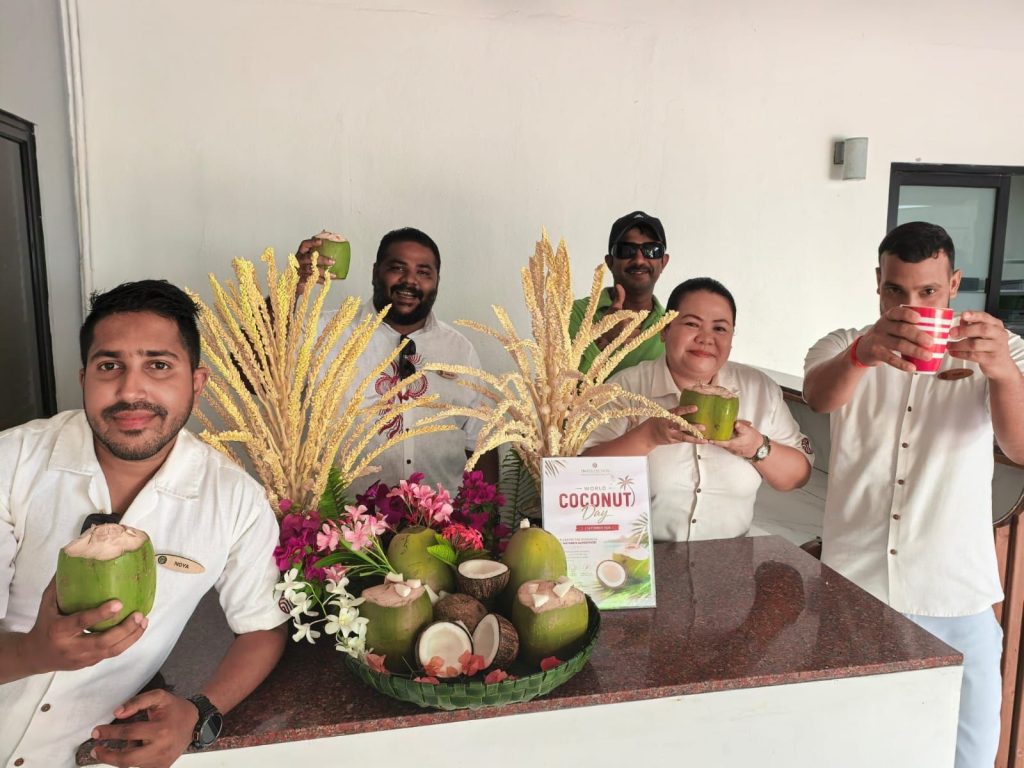
A resort kitchen may bring together chefs from the Maldives and many other countries, each carrying different culinary traditions and technical backgrounds. Activities centred on local ingredients can therefore become a form of knowledge exchange inside the operation itself.
For a chef arriving in the Maldives for the first time, learning why grated coconut is worked into a particular dish, how fresh coconut milk differs from a packaged substitute, or how the maturity of the fruit changes its use can provide context that a recipe sheet cannot.
At Madifushi, that learning took the form of a team competition and breakfast. At NH Collection Maldives Havodda, the day became an occasion to celebrate the ingredient’s cultural importance with the team. Both approaches demonstrate that preserving food culture does not have to happen only through the guest menu.
One ingredient, many uses
Hurawalhi Island Resort focused its World Coconut Day message on the coconut’s versatility, noting that different parts can be used, from its water through to the shell, and linking that versatility with island living.
For a professional kitchen, the same idea raises a useful question: how much of a coconut can one operation actually use?
Young coconut water can enter a beverage programme. Its flesh can be incorporated into desserts, salads and chilled preparations. Mature flesh can be grated, toasted or pressed. Coconut milk and cream move between savoury kitchens and pastry. Coconut oil creates another application, while shells can potentially find uses outside the food itself.
In a resort environment, where ingredients arrive after complex logistics and waste must ultimately be managed on an island, finding several purposes for a single product is more than a culinary exercise. It encourages teams to think about purchasing, yield and waste alongside flavour.
The ingredient itself invites that approach because Maldivians have historically used much more than what sits inside the shell.
The coconut as part of the island
Kudadoo Maldives Private Island took the World Coconut Day conversation back even further, to how the coconut reaches islands in the first place.
The resort highlighted the coconut’s ability to travel across the ocean and still germinate after reaching shore, one of the characteristics that has allowed coconut palms to establish themselves across tropical islands.
It is a natural-history observation, but it also helps explain why the coconut feels so inseparable from the Maldivian landscape.
A coconut palm beside a resort restaurant is not simply decoration. For generations, palms provided island communities with food, drink and materials. Their presence around today’s resorts creates an immediate connection between landscape and cuisine that chefs working in many other destinations have to travel much further to find.
World Coconut Day therefore offers more than an excuse for adding coconut desserts to a buffet.
It can prompt kitchens to ask where their coconuts come from. It can encourage chefs to revisit traditional preparations with Maldivian colleagues. It can bring techniques such as grating and fresh milk extraction into demonstrations and cooking classes. Beverage teams can work with kurumba. Pastry chefs can explore coconut at different stages and textures. Restaurants can explain the ingredient’s place in Maldivian food rather than using it simply as a tropical flavour cue.
From celebration to everyday cooking
The most interesting aspect of this year’s resort celebrations was their range.
At Madifushi Private Island, coconut became a team challenge before appearing at breakfast. At Sirru Fen Fushi, the story travelled directly from the island’s palms into the hands of arriving guests. NH Collection Maldives Havodda used the occasion to celebrate the ingredient’s cultural place with its team. Baros connected the day to Maldivian culinary heritage and participatory cooking. Hurawalhi drew attention to whole-product versatility, while Kudadoo looked at the palm as part of the ecology of tropical islands.
Together, they point towards a broader role for resort chefs.
International kitchens in the Maldives have access to ingredients, techniques and culinary influences from around the world. That diversity is one of the strengths of the country’s hospitality industry. But the ingredients found immediately outside those kitchens can be equally valuable in defining where a dining experience belongs.
Few illustrate that better than coconut.
It can be breakfast, curry, dessert or drink. It can be young or mature, grated or pressed. It can introduce a guest to a local flavour or teach a newly arrived chef something about the country in which they are working. And before any of those things, it is simply a coconut growing on an island.
World Coconut Day may put that ingredient in the spotlight for one day each September. In Maldivian kitchens, however, its story has never really been confined to a calendar.