Cora Cora Maldives’ Chef Ahmed Mohamed takes Japanese cuisine beyond the resort kitchen
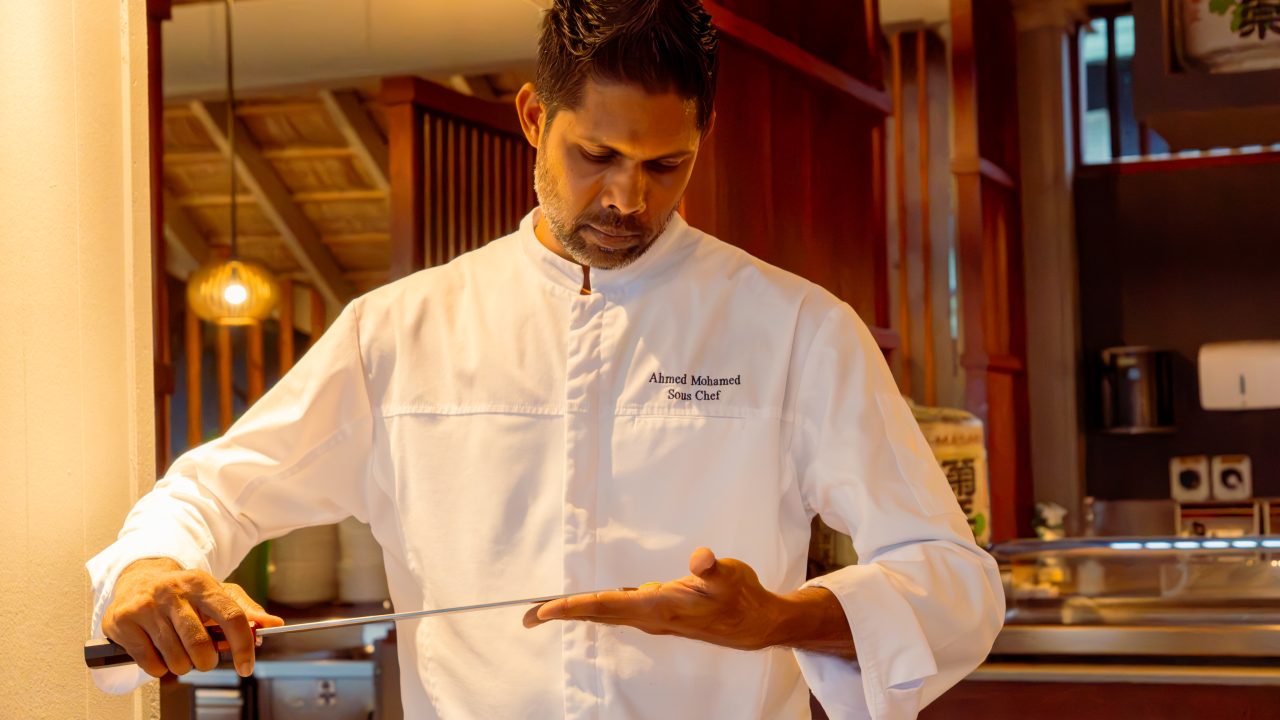
Ahmed Mohamed began his hospitality career carrying plates to guests. Today, as Sous Chef at Cora Cora Maldives, his work centres on Japanese cuisine, from preparing sushi and sashimi to cooking teppanyaki in front of diners. After more than two decades in resort kitchens, he is also thinking about where that experience could take him next: a restaurant of his own, serving the community he comes from.
That ambition was not part of the plan when he joined Paradise Island Resort & Spa as a waiter in 2004. His interest in cooking grew as he watched the chefs at work. A chef noticed his curiosity and encouraged him to consider entering the kitchen.
“That encouragement gave me the confidence to step into the kitchen and begin learning the culinary profession,” Ahmed recalls. “What started as curiosity gradually developed into a genuine passion.”
The move introduced him to the discipline of kitchen work and began a career that would take him through several resort operations. At Anantara Veli, exposure to Italian cuisine helped him understand how cooking traditions differ in their treatment of ingredients. At Anantara Kihavah, he developed his techniques while learning to meet expectations around consistency and presentation. Cora Cora Maldives brought further experience in Japanese cuisine, alongside responsibility for supporting a team.
“One lesson that has stayed with me throughout my career is that learning never stops,” he says. “Every kitchen, every colleague, and every challenge has something to teach us.”
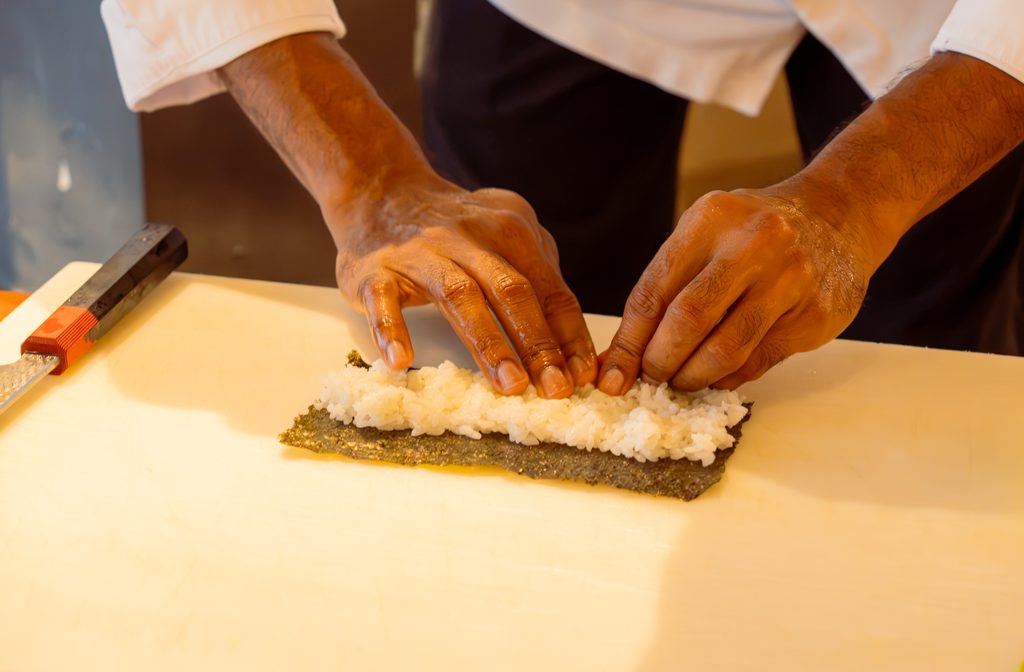
Japanese cuisine appealed to him because of the attention it demands at each stage of preparation. Teppanyaki offered a connection with guests through cooking, while sushi and sashimi required him to develop his knife work through practice. He learnt through experience and guidance from chefs, repeating techniques until he could apply them consistently.
“Japanese cuisine has taught me to respect ingredients and understand that even the simplest dish requires great skill,” he says.
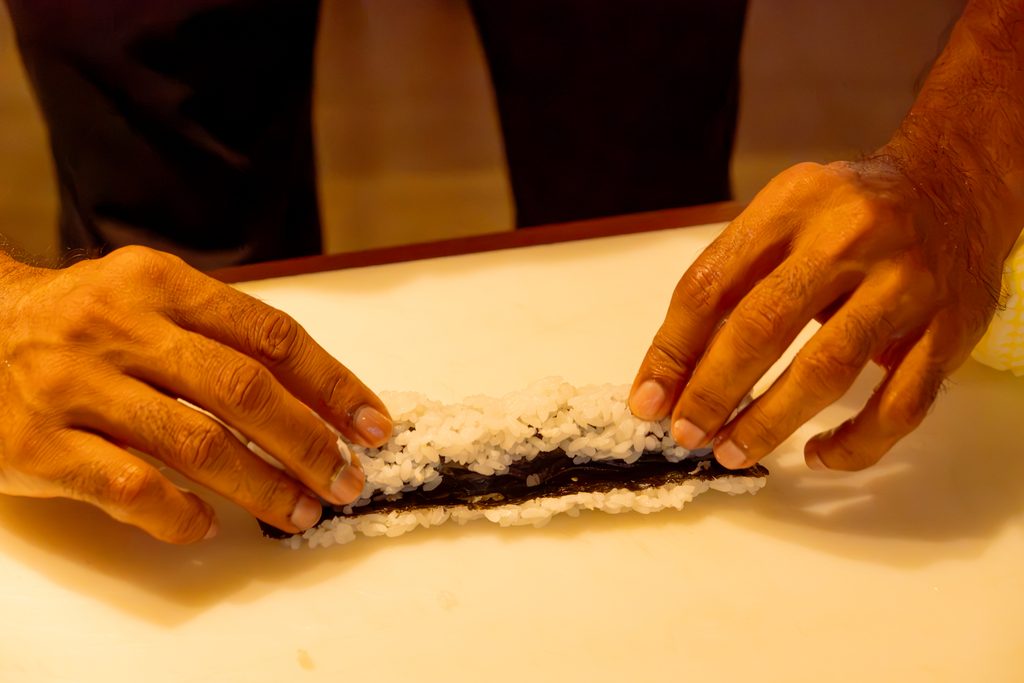
For Ahmed, preparing sushi and sashimi begins with ingredient selection and food safety. He emphasises handling, storage temperatures and hygiene, as well as choosing seafood suitable for consumption raw. The work continues through preparation: the way fish is cut affects its texture, while sushi depends as much on the seasoning and consistency of the rice as on the fish.
His approach to incorporating Maldivian ingredients follows those same considerations. Tuna provides a connection between Maldivian cooking and the cuisine he now specialises in. He sees scope for using locally sourced fish in Japanese preparations, provided it meets the handling and safety requirements of the dish.
Availability, size and quality can vary, however, and suitability for a particular preparation cannot be assumed. Ahmed approaches adaptation by retaining Japanese techniques and considering what the ingredient can contribute. Changes to a dish should follow an understanding of its foundations.
“For me, innovation does not necessarily mean making a dish complicated,” he says. “Sometimes a small change can create something unique without losing its authenticity.”
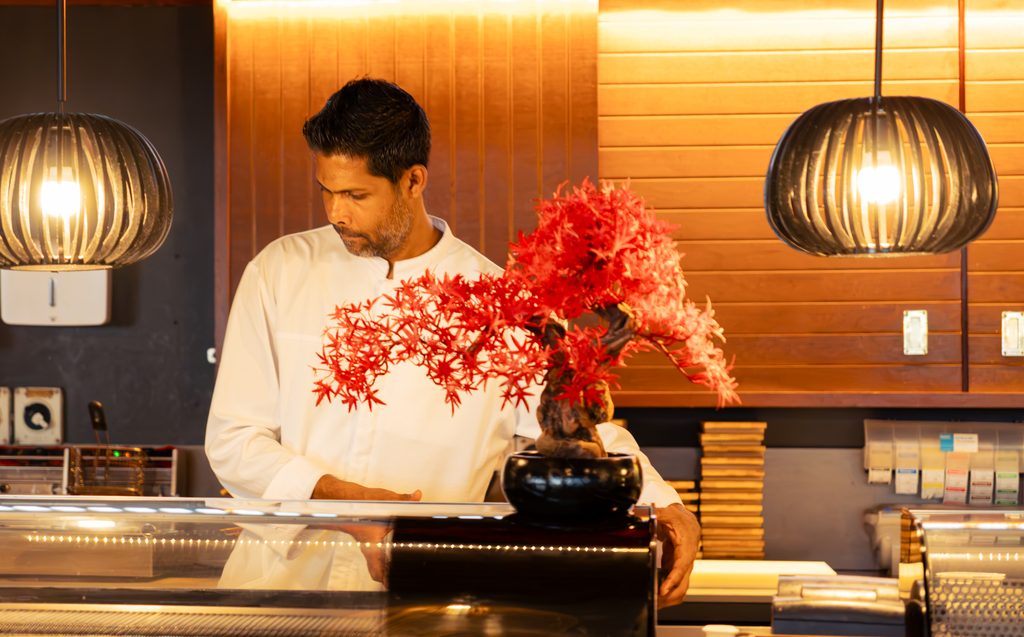
At the teppanyaki counter, that attention to preparation must work alongside conversation. Ahmed describes timing and readiness as essential to balancing cooking with guest interaction. He enjoys sharing stories, but also pays attention to how much engagement each diner wants. Some welcome conversation and entertainment; others prefer a quieter meal.
He has also observed changes in what guests ask of Japanese dining. In his experience, interest has expanded beyond familiar dishes and teppanyaki entertainment to include ingredients, preparation methods and the stories behind the food. Questions about allergens, dietary requirements and sustainability have become more prominent, requiring closer attention to each guest’s preferences.
Maintaining standards across those expectations is part of his responsibility as Sous Chef. Differences in seasoning, preparation or presentation can alter a dish, particularly when service becomes busy. Ahmed relies on planning and communication so that team members understand what is expected, and he works alongside them when the kitchen is under pressure.
“For me, a successful kitchen is not about one talented chef,” he says. “It is about a team working together with the same dedication to quality, consistency, and guest satisfaction.”
Competition kitchens have contributed to his development, too. Ahmed recalls winning a gold medal at the Hotel Asia Culinary Challenge in 2009, an experience that tested his ability to prepare and present food within a time limit. Participation in Hotel Asia and later FHAM competitions helped build his confidence and made him examine details that could affect the result. He values the learning involved as much as the recognition.
That emphasis on development carries into his mentoring. Remembering the guidance he received, Ahmed encourages younger chefs to establish their basics before attempting techniques that require more experience. Hygiene, ingredient handling and organisation come first, alongside knife skills. In Japanese cuisine, he stresses, improvement requires patience and repetition.
“I also try to create an environment where they feel comfortable asking questions and learning through practical experience,” he says.
Giving a trainee responsibility is part of that process. Ahmed wants younger chefs to have opportunities to practise and learn from mistakes, while understanding the importance of punctuality and willingness to listen. His advice to Maldivians entering the profession is to allow time for their skills to develop.
“My advice to young Maldivian chefs is not to rush their journey,” he says. “Focus on building a strong foundation, remain humble, and take every opportunity to learn.”
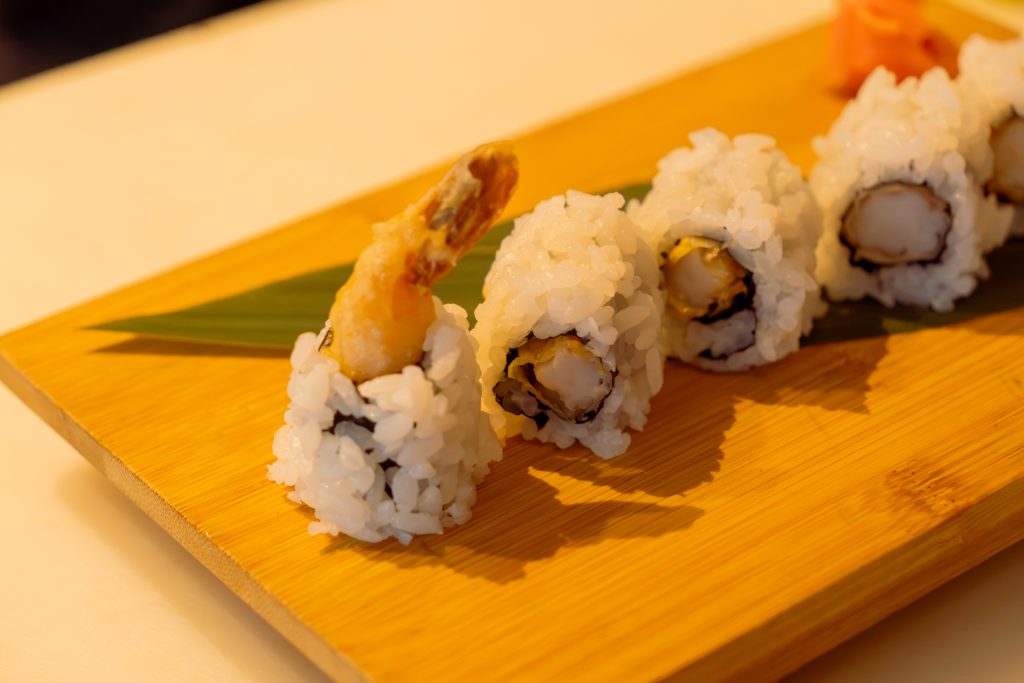
A collaboration with Chef Aminath Hameed of Maldivian Pâtissiers gave Ahmed an opportunity to share his cooking beyond the resort setting. For their Sushi Night, he prepared the starters and main courses, while Aminath handled pastry and desserts. The event brought their specialisations together for a local audience.
For someone who has spent much of his career cooking for resort guests, the opportunity carried significance. It also strengthened an ambition he had been considering: opening a Japanese restaurant in the Maldives, specialising in sushi and sashimi.
Ahmed sees growing interest in Japanese food among Maldivians and believes there is room to serve that demand. He wants a restaurant where diners can appreciate the preparation behind their meals, and where younger Maldivian chefs can gain experience.
“I also hope to create opportunities for young Maldivian chefs to learn and grow,” he says.
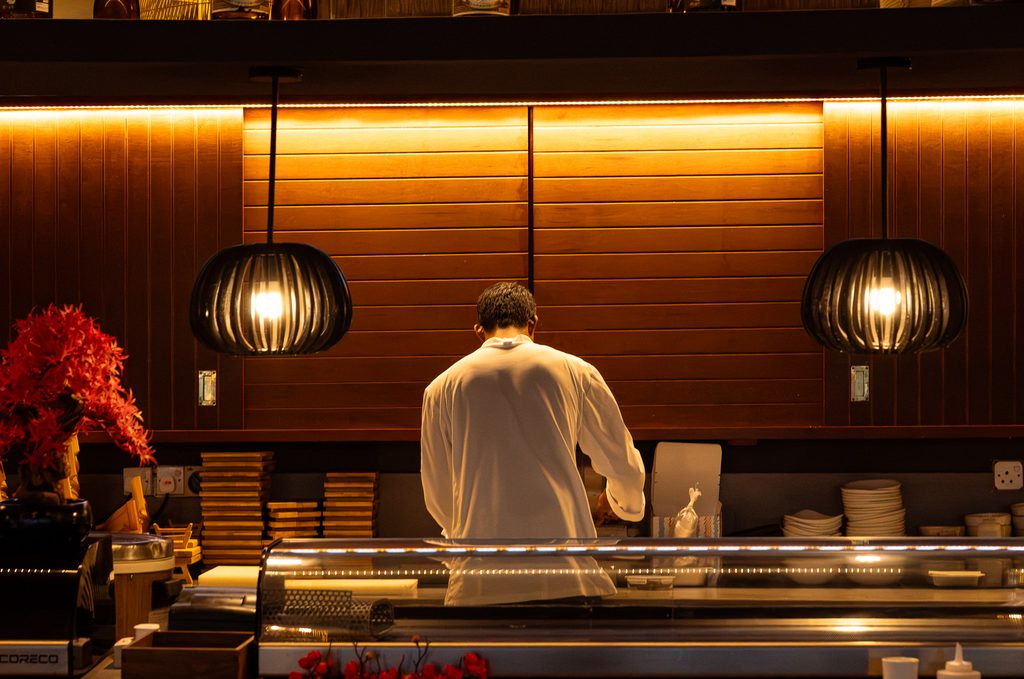
He wants to continue exploring Japanese techniques and ways of using local ingredients, while developing his leadership. For the next generation, he would like to see more access to specialist training, mentorship and experience abroad. The restaurant remains an ambition, but it would give him a place to cook for his community while helping other chefs develop.
“After spending so many years creating memorable dining experiences for guests from around the world, I hope that one day I can share that same passion with my own community, in a restaurant I can proudly call my own.”
Chefs Cora Cora Maldives Festive Interview Maldivian Chef Profile