Mercure Maldives Kooddoo puts Maldivian flavours at heart of ‘Voyage of the Dhoni’ festive season
Mercure Maldives Kooddoo will place Maldivian flavours and island culture at the centre of its Christmas and New Year programme, using the traditional dhoni as the narrative connecting festive feasts, local cuisine, music and celebrations from 21 December 2026 to 7 January 2027.
Presented as “Voyage of the Dhoni – A Maldivian Island Celebration”, the programme draws inspiration from the traditional vessel that for generations has transported people, goods and stories between islands across the Maldives.
For the resort’s culinary and food and beverage teams, the theme provides an opportunity to interpret the festive season through a distinctly Maldivian lens rather than relying solely on the international dishes traditionally associated with Christmas and New Year.
The resort said festive dining will bring holiday traditions together with local flavours, while the New Year programme will culminate in a celebratory feast accompanied by Boduberu, drinks, live music and entertainment.
The programme reflects a wider opportunity for Maldives resort chefs: using major international celebrations to introduce guests to the country’s culinary identity while still providing the familiarity expected during Christmas and New Year.
Maldivian flavours enter the festive table
Christmas at Mercure Maldives Kooddoo will combine traditional festive dining with flavours from the Maldives.
The resort has not detailed individual dishes in the programme, but its emphasis on local cuisine gives the culinary brigade considerable scope to draw on ingredients and flavour combinations associated with Maldivian cooking.
Fish, particularly tuna, remains fundamental to Maldivian food culture, alongside coconut, chilli, onion, lime and spices.
For chefs, these ingredients provide several pathways into festive menu development.
Local flavours can be presented through traditional preparations, incorporated into live stations or used as references within contemporary dishes designed for an international resort audience.
The challenge is to ensure that Maldivian food is not treated simply as a decorative cultural addition to a wider international buffet.
When incorporated meaningfully, local cuisine can provide one of the strongest connections between a guest and the destination.
A Christmas meal may include familiar festive dishes, but the presence of genuinely Maldivian flavours gives diners something that could only belong to the island on which they are celebrating.
Mercure Maldives Kooddoo describes the experience as an invitation for guests to “come curious” and discover flavours they may not have expected.
For chefs, that element of discovery is important.
Many international visitors may have limited familiarity with Maldivian cuisine when they arrive. Resort kitchens can therefore act as an introduction, balancing authenticity with accessibility and providing enough context for diners to understand unfamiliar ingredients and preparations.
The dhoni as culinary storytelling
The dhoni provides the conceptual framework for the entire programme.
Traditionally used for fishing, transport and travel between islands, the vessel has long been connected to the movement of people and goods throughout the archipelago.
That history also has culinary relevance.
The food culture of an island nation is inseparable from transport, fishing and exchange. Ingredients move between communities, fish comes ashore from the ocean, and culinary traditions are passed between islands and generations.
Using the dhoni as the central festive symbol therefore allows Mercure Maldives Kooddoo to connect food with a wider Maldivian story.
For chefs, culinary storytelling of this kind can add meaning to a menu without requiring every dish to become overly conceptual.
A seafood preparation, local condiment or familiar Maldivian flavour can carry greater significance when diners understand its relationship with island life.
The same applies to service and presentation.
Menus, live stations or dining environments can be structured around the broader theme of a journey, allowing guests to move through different flavours in the same way that a dhoni historically moved between islands.
This approach can make food part of the narrative rather than simply catering accompanying an entertainment programme.
Christmas with an island identity
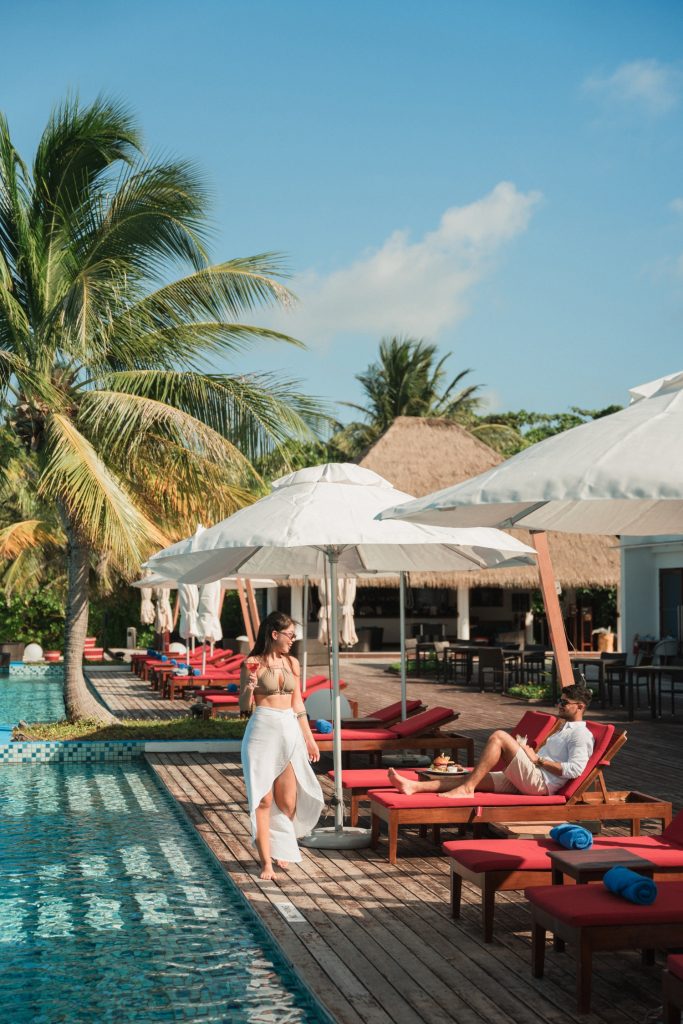
The celebrations will begin with a Christmas Tree Lighting ceremony and continue through festive dining, live music and Boduberu performances.
Boduberu provides another strong connection between the food programme and Maldivian culture.
Although drumming and cuisine are different forms of expression, they can work together to give a festive event a stronger sense of place.
For guests, the result is not simply an international Christmas dinner taking place in the Maldives, but a celebration shaped by the rhythms and flavours of the destination itself.
For resort chefs, this distinction matters.
Christmas menus in international hospitality often need to meet expectations around familiar dishes and seasonal traditions. Guests may arrive anticipating flavours associated with their own celebrations.
The culinary challenge is therefore to preserve a sense of comfort while still allowing the destination to be visible.
Rather than removing international Christmas food, chefs can place it alongside local dishes, Maldivian ingredients and seafood preparations.
That creates a broader culinary experience in which familiar and unfamiliar elements coexist.
The concept also reflects the reality of Maldives resort kitchens, where brigades routinely work across multiple cuisines to serve guests from different markets.
Festive periods bring that diversity into particularly sharp focus.
New Year’s Eve brings the voyage together
The “Voyage of the Dhoni” theme will reach its main celebration on New Year’s Eve.
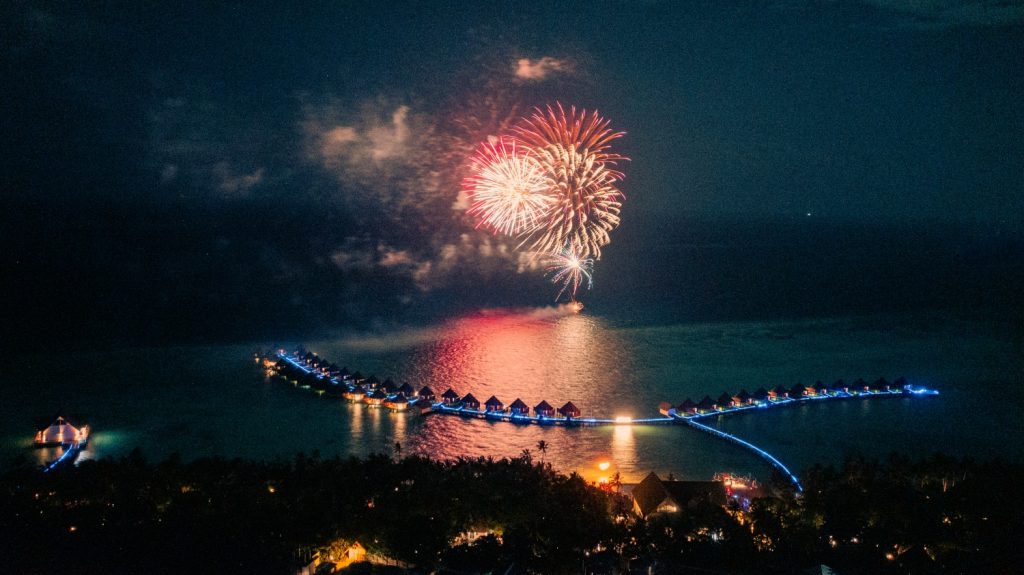
As 2026 draws to a close, Mercure Maldives Kooddoo will stage an evening featuring Boduberu, festive drinks, a celebratory feast, live music and entertainment before the countdown to 2027.
For culinary teams, New Year’s Eve is typically among the most demanding services of the year.
Large festive dinners require careful coordination between hot kitchen, garde manger, pastry, bakery, bar, stewarding and front-of-house teams.
Menu planning begins well before the event itself.
Ingredients need to be ordered in advance, particularly on an island where imported products are dependent on transport schedules. Preparation then needs to be divided between items that can be completed early and those requiring last-minute cooking or assembly.
The guest-facing experience may feel spontaneous, but the operation behind it depends heavily on detailed planning.
At Mercure Maldives Kooddoo, the festive theme adds another dimension because the culinary programme is expected to communicate the broader idea of an island voyage.
The food, drinks, music and cultural elements therefore need to work together rather than function as separate parts of the evening.
Festive drinks and island gatherings
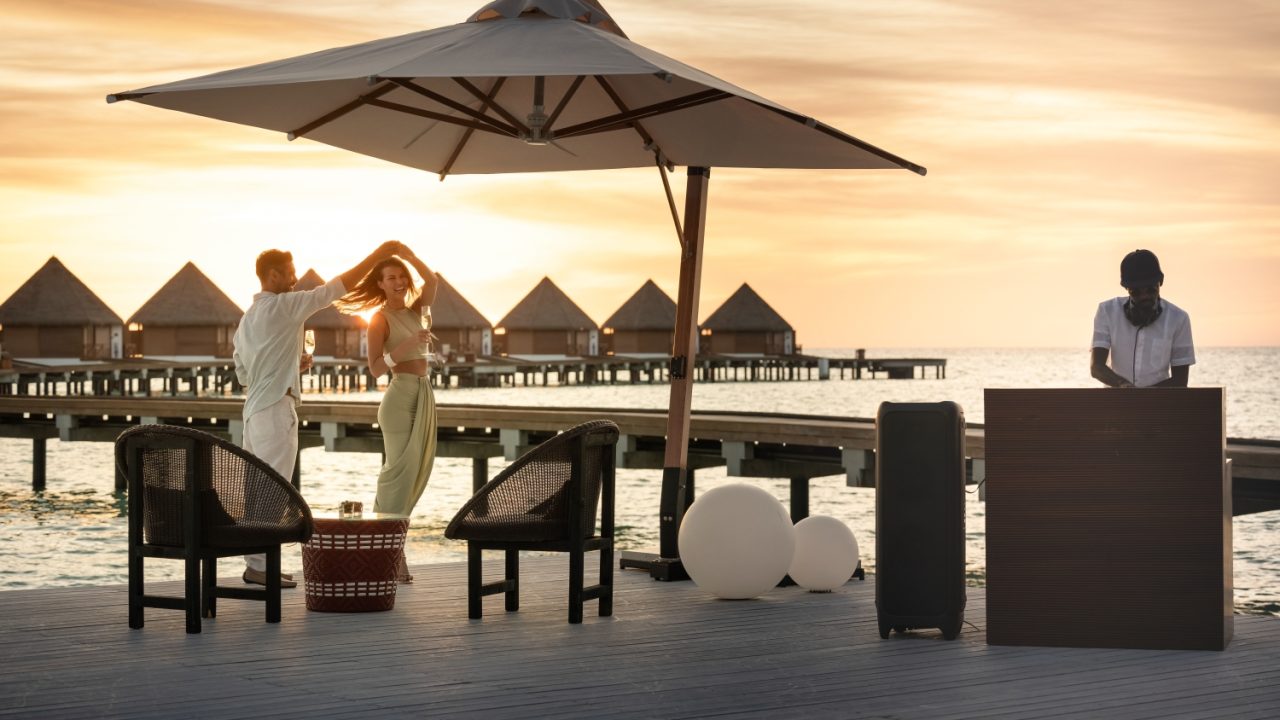
Beverage service will also play a role in the celebrations, particularly during New Year’s Eve and the resort’s sunset gatherings.
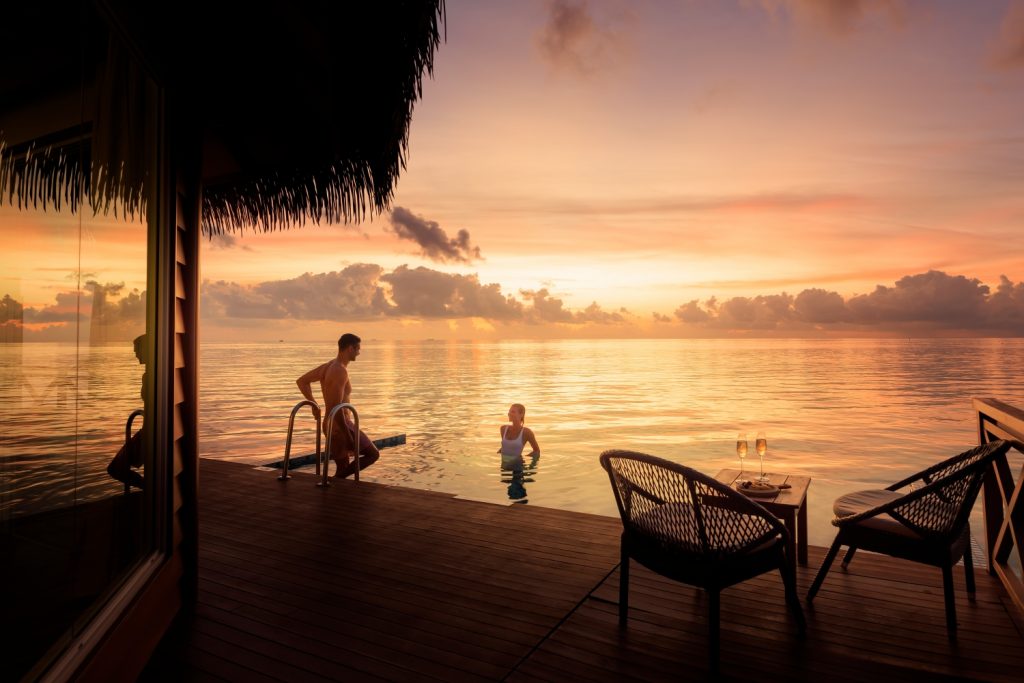
The press release highlights moments built around raising a glass with new friends, sunset experiences and festive drinks as part of the programme.
For beverage teams, these occasions provide an opportunity to develop drinks that support the wider island theme.
Cocktails can connect to the destination through tropical fruit, citrus, herbs, spices and other ingredients associated with the region, while presentation can reference the colours and atmosphere of the island.
As with themed food, however, visual identity should not replace flavour balance.
A successful signature cocktail still depends on proportion, dilution, temperature and a clear relationship between its ingredients.
Festive events also create operational pressure at the bar.
Demand often increases rapidly around sunset, pre-dinner receptions and the countdown to midnight. Bartenders therefore need extensive mise en place, with garnishes, syrups, juices, glassware and ice prepared before peak periods.
Selected components can be batched in advance to improve consistency and service speed without compromising the quality of the finished drink.
Seafood and the island setting
Although the resort has not released a detailed menu, a festive programme centred on Maldivian flavours naturally places attention on the relationship between seafood and island cuisine.
For chefs in the Maldives, seafood is simultaneously an ingredient, a cultural reference and a connection to the environment.
Fish can be prepared using traditional flavour combinations or interpreted through modern resort cooking, but successful execution still begins with basic principles: freshness, handling, temperature and appropriate cooking technique.
Delicate seafood responds quickly to heat, making timing critical during high-volume service.
This becomes particularly important during gala-style events, where large numbers of guests may be served within a relatively short period.
Live stations can help culinary teams address this by cooking selected products closer to service.
They can also introduce guests directly to the chefs preparing their meals and create opportunities to explain ingredients or techniques.
For local cuisine, that interaction can be particularly valuable.
A chef can tell a guest what a preparation is, how it is traditionally eaten or why a particular ingredient matters to Maldivian food culture.
Pastry teams behind the festive experience
Christmas and New Year celebrations also place significant demands on pastry and bakery departments.
While Mercure Maldives Kooddoo has not detailed its dessert programme, festive operations typically require substantially greater production than regular restaurant service.
Pastry teams may be responsible for buffet desserts, cakes, chocolates, breads, breakfast pastries, amenities and decorative elements alongside their normal output.
In tropical resort conditions, this work carries specific technical challenges.
Chocolate and sugar decorations can be particularly sensitive to heat and humidity, while desserts placed on outdoor buffets need sufficient structural stability to remain presentable throughout service.
Pastry chefs therefore need to design for both aesthetics and environment.
Festive flavours also offer room for local interpretation.
Coconut and tropical fruit can provide natural links to the destination, allowing pastry teams to build desserts that feel celebratory without depending exclusively on flavours imported from European winter traditions.
For chefs, this is another way in which a Christmas programme can retain its festive character while still belonging to the Maldives.
Local identity without losing familiarity
Mercure Maldives Kooddoo’s programme raises a broader question facing resort chefs across the country: how far should a festive menu adapt to the destination?
International guests arrive with different traditions.
Some expect roast meats and familiar Christmas desserts. Others may have entirely different seasonal food customs, while some guests travel specifically because they want to experience something unlike the celebrations at home.
There is no single menu capable of satisfying all these expectations in the same way.
The most effective approach is often to provide enough variety for guests to find familiarity while using local food to distinguish the experience.
Mercure’s “Voyage of the Dhoni” concept provides a clear framework for that balance.
International festive traditions remain present, but Maldivian flavours, Boduberu and the story of the dhoni give the programme its destination identity.
For chefs, this approach can be more meaningful than adding a token local dish to the edge of a large buffet.
The culinary narrative begins with the Maldives itself and allows international elements to sit within that story.
Food as a form of discovery
The resort repeatedly describes the festive season in terms of curiosity and discovery.
That philosophy has particular relevance to gastronomy.
Food is one of the easiest ways for travellers to engage with an unfamiliar culture.
Guests may not immediately understand the history of an island or the significance of a traditional boat, but a flavour can create an immediate point of connection.
A dish built around tuna, coconut, chilli or local spices can prompt questions. A chef can then explain where it comes from, how it is prepared or how it relates to daily life in the islands.
This makes culinary teams important cultural interpreters.
Their role extends beyond producing food accurately and efficiently.
They also determine how local cuisine is represented to people encountering it for the first time.
Presentation, language and context all influence whether the experience feels authentic, approachable or merely decorative.
At Mercure Maldives Kooddoo, the festive programme gives the kitchen an opportunity to make this type of discovery part of Christmas and New Year rather than a separate cultural activity.
A shared effort across the F&B operation
Delivering the programme will depend on more than the culinary brigade alone.
Purchasing and stores teams will need to anticipate festive demand and ensure that ingredients reach the island on schedule.
Stewarding will support increased service volumes and additional event equipment.
Bar teams will manage festive drinks and sunset gatherings.
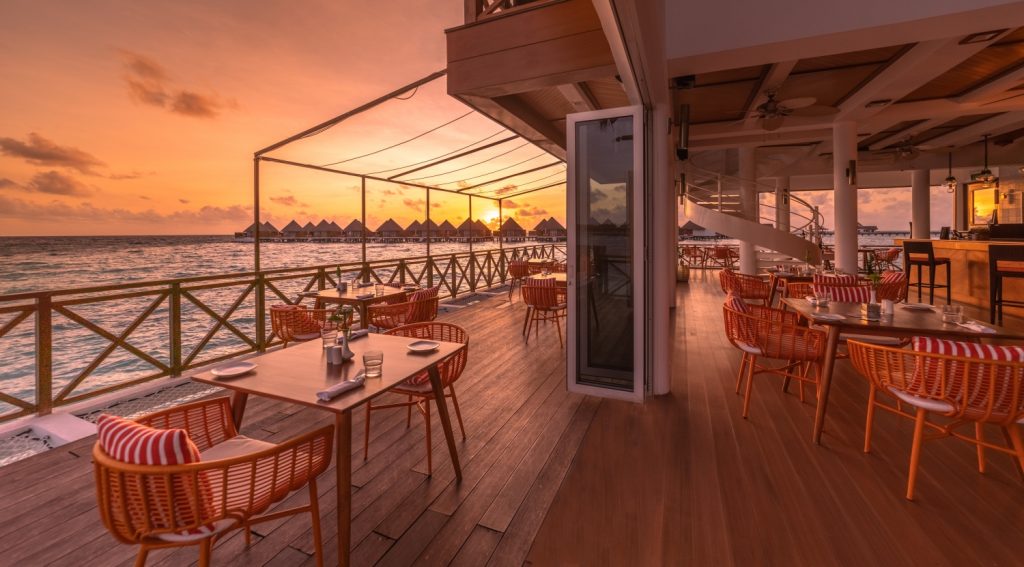
Front-of-house colleagues will explain dishes, manage guest flow and help connect the menu with the wider “Voyage of the Dhoni” story.
For larger festive functions, coordination across these departments becomes critical.
A menu can be creatively strong but still fail if service, replenishment or logistics are not aligned.
The best festive experiences are therefore operational achievements as much as culinary ones.
This is particularly true on a Maldives island, where the physical separation from major supply hubs means planning mistakes cannot always be corrected quickly.
Telling a Maldivian story through the festive table
Mercure Maldives Kooddoo’s 2026–2027 programme ultimately places one central idea at the heart of its food and beverage offering: Christmas and New Year can feel recognisably festive without losing their connection to the destination.
The traditional dhoni provides the story.
Maldivian flavours provide one of the ways guests experience it.
Boduberu, sunsets, island gatherings and the ocean complete the context.
“For us, the most memorable holidays are the ones that leave you curious,” said Riaan Drever, Cluster Resort Manager at Mercure Maldives Kooddoo.
“With ‘Voyage of the Dhoni – A Maldivian Island Celebration’, we wanted to create a festive season that feels genuinely connected to the Maldives — warm, welcoming, spontaneous and full of discovery. The Dhoni is more than just a boat; it is part of an island life and a symbol of connection between people and places.”
He added: “This festive season, we invite you to step aboard, immerse yourself in local flavours, connect with the spirit of the island, and uncover your own unexpected discoveries.”
For chefs and food and beverage professionals, the programme offers an example of how a resort can use a global celebration to showcase local culinary identity.
Rather than allowing Christmas and New Year traditions to temporarily replace the destination, Mercure Maldives Kooddoo is bringing the Maldives into the centre of them.
From festive spreads carrying local flavours to the New Year feast, drinks and cultural performances, “Voyage of the Dhoni” will use food as one of the principal ways to take guests on that journey.