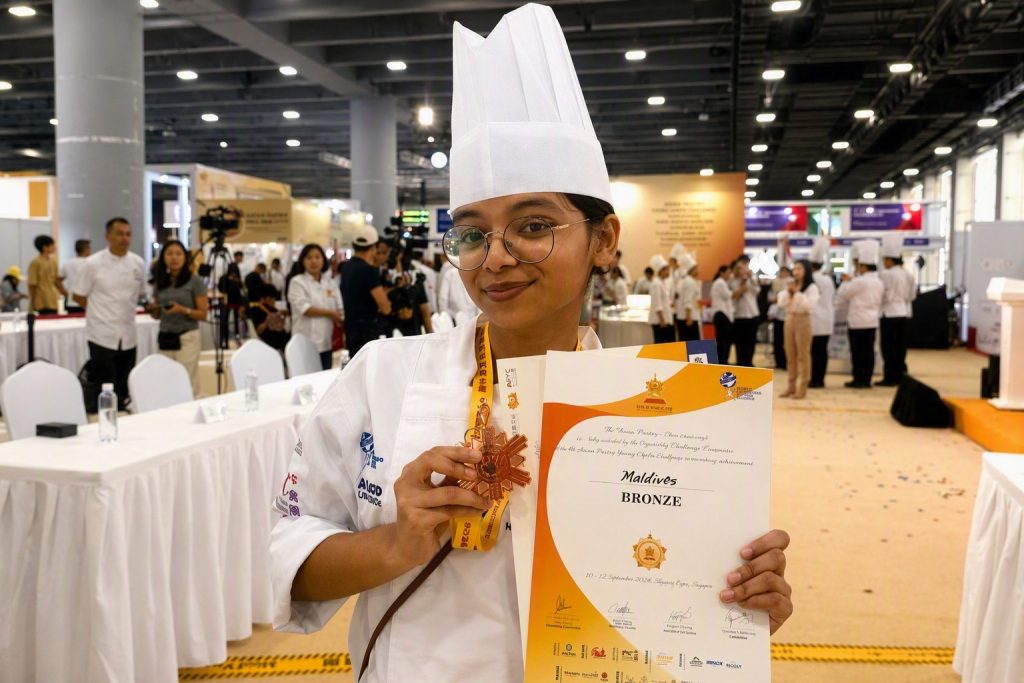
Young Maldivian pastry chefs claim bronze at Asian competition in China
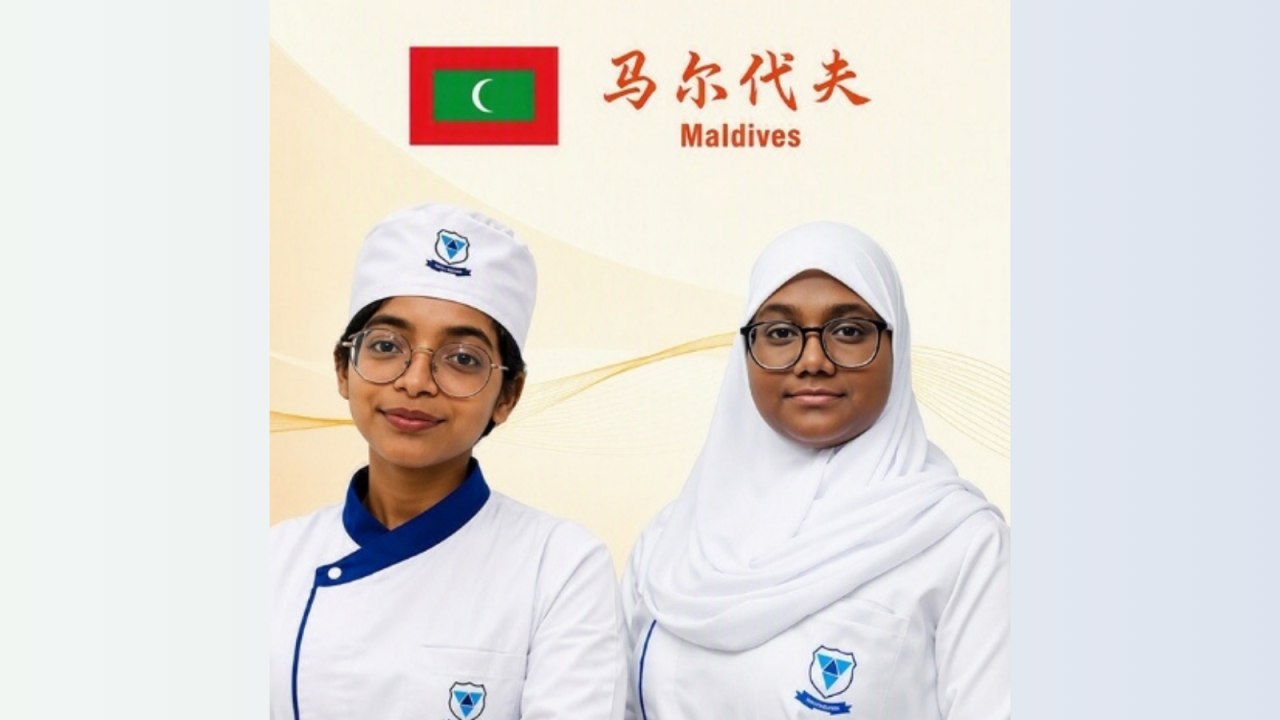
The Maldives has won a bronze medal at the 4th Asian Pastry Young Chefs Challenge, with young chefs Hawwa Alesha Naween and Mariyam Uzma Mahmood representing the country with a competition portfolio combining chocolate work, pulled sugar, mousse, tarts and flavours associated with Maldivian cuisine.
The competition was held from 10 to 12 September in Guangzhou, China, bringing together emerging pastry chefs from across the region to demonstrate technical ability, creativity and craftsmanship.
Organised by the China Cuisine Association and included on the Worldchefs international competition calendar, the event provided young pastry professionals with an opportunity to test their skills in a competition environment where technique, presentation and consistency are central to the judging process.
Alesha, 18, and Uzma, 20, represented the Maldives through the Chefs Guild of Maldives.
Both are students at Villa College, where they are completing a Certificate IV in Culinary Arts, making the bronze medal an early international achievement in their professional development.
Their competition entry combined contemporary pastry techniques with ingredients and flavour references connected to the Maldives.
Among the centrepieces was an artistic chocolate tree decorated with pulled-sugar flowers, demonstrating two disciplines that require considerable technical control: chocolate work and cooked sugar.
For young pastry chefs, both techniques present particular challenges.
Chocolate must be handled within controlled temperatures to achieve the required shine, snap and structural stability. Tempering, moulding and assembly all demand accuracy, while larger decorative pieces require consideration of balance, weight and the strength of individual components.
Pulled sugar brings its own technical requirements. Sugar must be cooked to the correct temperature before being cooled and manipulated while still pliable. The pastry chef then has a limited working window in which to pull, shape and assemble decorative elements before the sugar hardens.
Humidity can make the discipline especially demanding, as finished sugar pieces readily absorb moisture from the surrounding environment.
By incorporating pulled-sugar flowers into the chocolate tree, Alesha and Uzma were required to bring the two mediums together as part of a single showpiece while maintaining both visual detail and structural stability.
Their plated and pastry preparations demonstrated a similarly broad range of techniques.
The pair presented a coconut mousse with passion fruit coulis, combining the richness of coconut with the acidity and tropical character of passion fruit.
For pastry chefs, mousse construction requires careful management of texture and aeration. The finished preparation must be light enough to retain the character expected of a mousse while remaining stable enough for clean presentation and service.
The accompanying passion fruit coulis provides acidity, helping balance the richness of coconut while contributing another layer of flavour and colour to the dessert.
The combination is also closely suited to the tropical context of the Maldives, where coconut remains one of the country’s most familiar culinary ingredients.
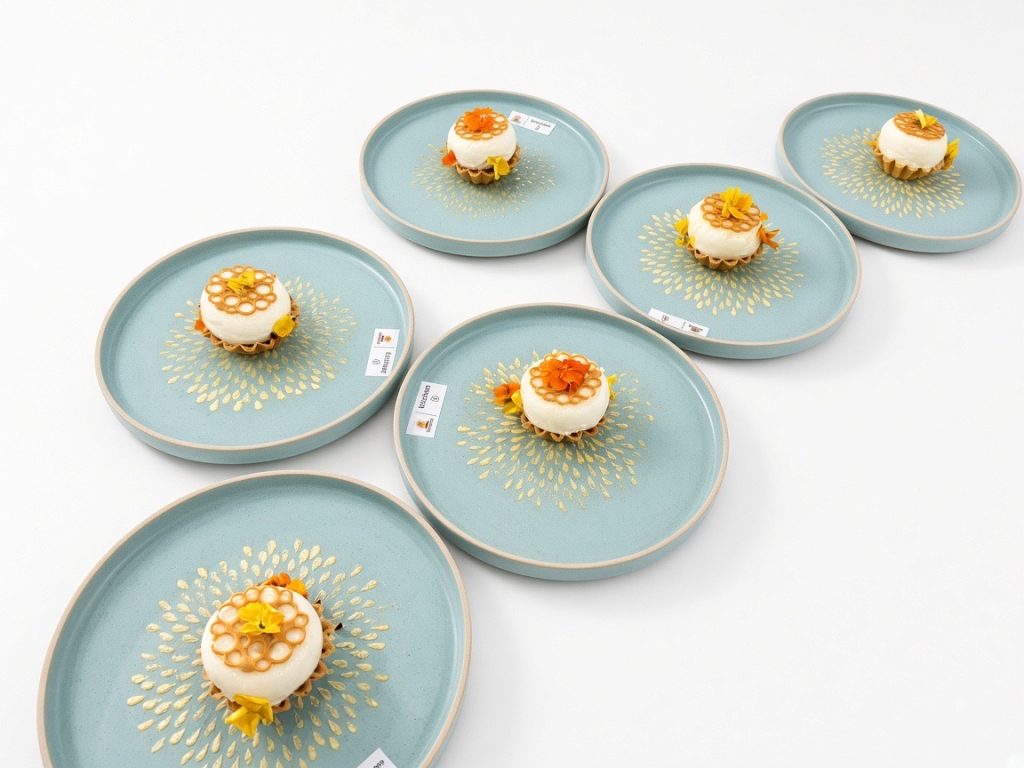
Another entry was a kanamadhu tart with huni hakuru filling.
Kanamadhu, or sea almond, provides a direct Maldivian reference within the competition portfolio, while huni hakuru draws on the traditional use of coconut and sweet preparations associated with local food culture.
In adapting these ingredients to a tart format, the young chefs brought familiar Maldivian flavours into a contemporary pastry structure.
Tart production demands accuracy across several individual components. The shell must be baked evenly while retaining its shape and texture, the filling must complement rather than overwhelm the pastry base, and the finished item must remain balanced in sweetness, texture and presentation.
Using local ingredients in an international pastry competition also requires chefs to think about how those flavours can be expressed within recognised pastry formats without losing their identity.
For young Maldivian chefs, this is particularly significant.
The country’s culinary heritage contains ingredients, flavours and preparations that can be interpreted through contemporary pastry, from coconut and tropical fruit to nuts and traditional sweets.
International competitions provide a platform for chefs to explore how those ingredients can be presented in ways that are technically disciplined while remaining connected to their origin.
Alesha and Uzma also produced a chocolate sponge layered with pecan nut crunch, raspberry confit and chocolate mousse.
The dessert brought together several textures and techniques within a single preparation.
Chocolate sponge provides the structural base, while pecan nut crunch introduces a contrasting crisp element. Raspberry confit contributes fruit acidity, helping counter the richness of the chocolate mousse.
Layered desserts require careful control of thickness, texture and proportion. Each component must remain identifiable without competing with the others, while the assembled pastry must be sufficiently stable to portion and present cleanly.
Temperature management is equally important, particularly where mousse, chocolate and fruit preparations are combined.
Across their competition portfolio, the Maldivian team demonstrated work in chocolate, sugar, mousse preparation, fruit sauces, tart production, sponge, confit and textural layering.
That breadth is significant in a young-chef competition because pastry professionals are generally assessed not only on creativity but also on their command of fundamental techniques.

Competition environments also test skills that are less visible in the finished product.
Participants must organise mise en place, manage their working time, maintain hygiene, minimise errors and execute several components according to a fixed schedule. Decorative work must be completed alongside edible preparations, meaning competitors need to plan each stage around cooling, setting, baking and assembly times.
For young chefs, this pressure can make competitions an important extension of culinary education.
Training in a classroom or professional kitchen develops individual techniques, while competition requires those techniques to be delivered together under time and performance constraints.
The bronze medal therefore represents more than the finished desserts presented in Guangzhou. It reflects preparation undertaken before the competition, including recipe development, repeated practice, technical refinement and planning.
It also places attention on the development of young Maldivian chefs at a time when pastry and bakery are becoming increasingly specialised areas within the country’s hospitality industry.
Maldives resorts employ pastry professionals across a wide range of operations, from breakfast bakery and restaurant desserts to chocolate work, afternoon tea, celebration cakes, amenities, buffets and large-scale festive production.
The technical foundation developed through competitions can therefore transfer directly into professional resort kitchens.
Skills such as chocolate tempering, sugar decoration, mousse production, tart construction and layered entremets are widely used across high-end hospitality operations, while the discipline required for competition can support consistency and organisation during service.
The use of Maldivian flavours is another important aspect of Alesha and Uzma’s entry.
As young chefs develop international pastry techniques, the opportunity remains to interpret ingredients and traditions from the Maldives through contemporary forms rather than relying solely on established European flavour combinations.
The kanamadhu tart with huni hakuru filling is one example of how local identity can be incorporated into pastry competition work, while coconut provided another link between the international competition format and ingredients familiar to Maldivian cuisine.
For students entering the profession, that combination of technical training and culinary identity can become an important part of career development.
International competitions expose participants to different standards, working styles and approaches to presentation while allowing them to benchmark their skills against peers from other countries.
They also provide a platform for Maldivian chefs to demonstrate that the country’s culinary industry extends beyond resort restaurants and established professionals to a new generation entering the sector.
With their bronze medal at the 4th Asian Pastry Young Chefs Challenge, Hawwa Alesha Naween and Mariyam Uzma Mahmood have added an international result to that development.
Their work in Guangzhou showcased both classical pastry disciplines and Maldivian flavour references, while demonstrating the potential of young chefs who are still at the beginning of their professional careers.
For the Maldives pastry community, the result is also a reminder of the role that education, mentorship and competition exposure can play in preparing the next generation of chefs for professional kitchens and international culinary platforms.